Read the leaf first
Begin with the damage rather than a guess. Where is it — new growth, old leaves, flowers, roots? Is the tissue removed, discoloured, distorted or simply sticky? Is the damage fresh, with pale moist edges, or old and browned? Old damage on a plant that is now growing cleanly needs no action at all; the feeder has moved on.
Remember that diseases, frost, sun scorch, herbicide drift and drought can all imitate insect damage. Brown, crisp leaf edges after a dry week are more likely water stress than a pest.
Holes and notches
Slugs and snails leave irregular holes and slime trails that dry to a silvery sheen. They feed at night and in wet weather, so damage appears overnight. Seedlings and soft-leaved plants suffer most.
Caterpillars also make irregular holes, but they leave frass — small pellets of droppings — on lower leaves. Cabbage white caterpillars on brassicas are the classic case. Sawfly larvae, which resemble caterpillars, can strip gooseberry and Solomon's seal leaves in days.
Vine weevil adults (Otiorhynchus sulcatus) cut rough notches from leaf margins at night. The notches are mostly cosmetic; the cream, C-shaped larvae feeding on roots in containers are what matters.
Not a pest: perfectly circular or oval pieces cut from rose leaves are the work of leafcutter bees such as Megachile centuncularis, which line their nests with them. Enjoy the sighting.
Sap-feeders: sticky, curled, speckled
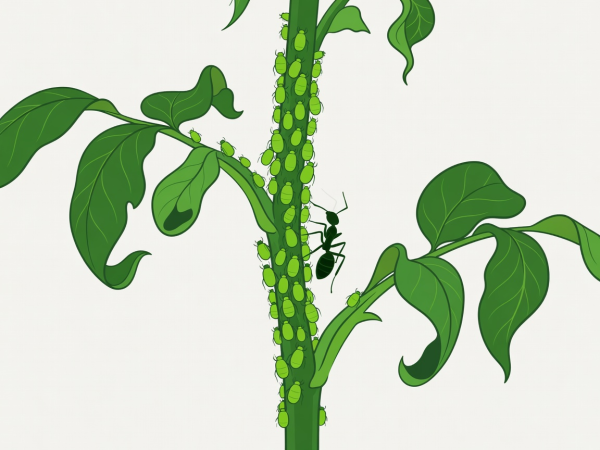
Aphids, whitefly, scale insects and mealybugs pierce plant tissue and drink sap. The tell-tale signs are curled or distorted shoot tips, sticky honeydew on leaves below, and sometimes black sooty mould growing on that honeydew. Lines of ants climbing a stem often lead straight to an aphid colony.
Spider mites cause a fine, pale stippling on upper leaf surfaces, sometimes with delicate webbing. They thrive in hot, dry conditions, particularly in greenhouses. A hand lens will show tiny moving dots on the undersides.
Miners, rollers and galls
Pale winding tunnels or blotches inside the leaf are made by the larvae of small flies, moths or beetles feeding between the leaf surfaces. Holly leaf miner blotches are common and almost never harm the tree. Rolled or folded leaves may hide a caterpillar or sawfly. Galls — swellings on leaves or stems — are usually caused by mites, midges or wasps and are rarely worth any intervention.
Roots and stems
A plant that wilts in moist soil may have root damage. Tip a container plant out and look for vine weevil larvae. In open ground, cutworms (moth caterpillars that live in soil) can sever young plants at soil level overnight.
Mammals and birds
Rabbits cut stems cleanly at an angle and leave round droppings. Deer lack upper front teeth, so they tear rather than cut, leaving ragged edges higher up. Wood pigeons strip brassica leaves to the midrib. Squirrels dig shallow holes in pots and lawns. Badgers and foxes can leave scuffed patches — often while hunting chafer grubs, which says something about what lives in the lawn.
Cosmetic, moderate or serious?
Ask three questions: Is the plant young or established? Is the damage spreading or static? Is the harvested part — fruit, leaf, root — affected? An established shrub with some holes is cosmetic. A tray of seedlings losing leaves each night is serious. Damage to the edible part of a crop sits in between and depends on your own tolerance.
Pest ranges and seasons vary by region and climate. For a local opinion, the Royal Horticultural Society (UK members) or your Cooperative Extension office (US) can confirm identifications. Community platforms such as iNaturalist and BugGuide are helpful too, but treat any single online answer as a clue rather than a verdict.